
There is a quiet, haunting agony that strikes us in the middle of the night: the sudden realization that despite all our agonizing over choices, our paths might already be written. We live in an era obsessed with self-made success and absolute autonomy, yet science and philosophy increasingly suggest we are driven by forces beyond our control. This is the heart of the determinism vs free will debate. It is not just an academic puzzle; it is the ultimate tragedy of the human condition.
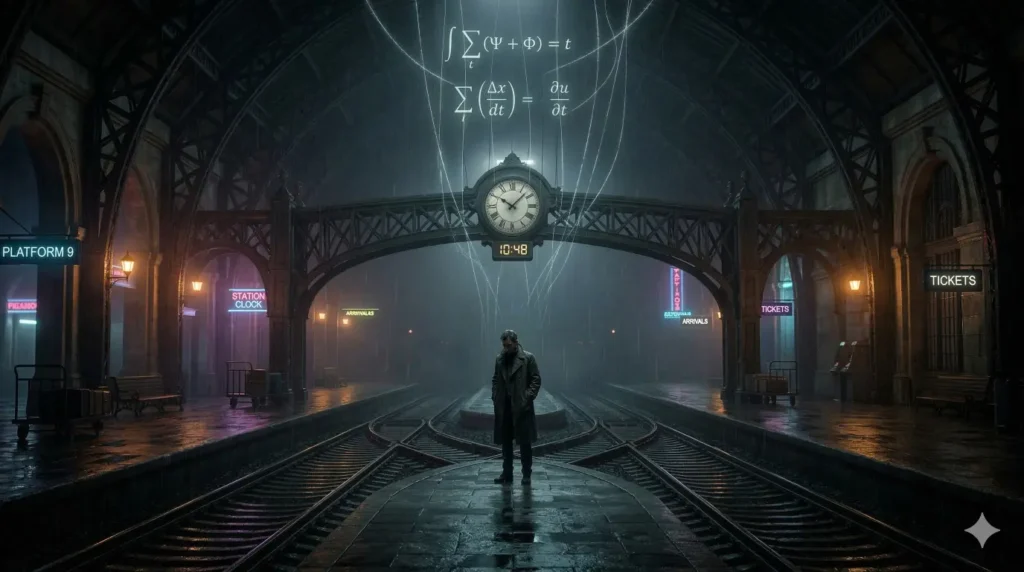
How do we reconcile the undeniable, suffocating weight of unseen biological and historical strings with the profound, everyday feeling that we are entirely free? To explore this paradox is to step into a beautifully melancholic realization about what it means to be human in the modern age.
The Agony of Choice in a Scripted World
When we stand at a crossroads in life—choosing a career, ending a relationship, or moving to a new city—the anxiety we feel is visceral. The battle of determinism vs free will plays out in our own minds. If determinism holds true, and every cause has a pre-calculated effect stretching back to the dawn of the universe, then our agonizing over decisions is functionally useless. The choice was made for us long before we even recognized the options.
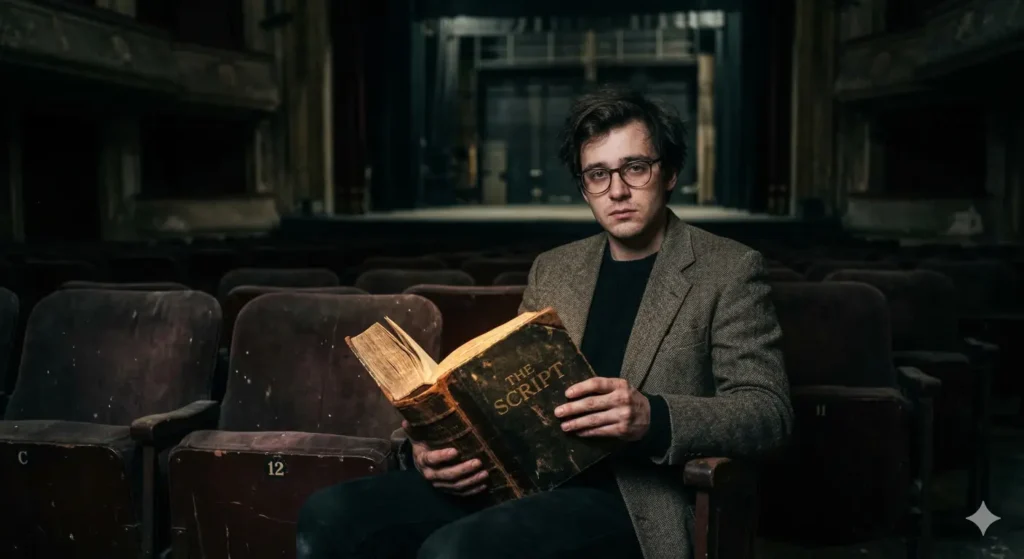
Yet, we cannot simply turn off the feeling of agency. We are condemned to feel free. The conscious mind, completely blind to the intricate machinery of Schopenhauer’s Will or Hegel’s Absolute Spirit, operates as if it is the master of its fate. We bear the crushing responsibility and the bitter regret of our choices, even if we never truly had the power to choose otherwise. This is the paradox: we are actors forced to improvise on a stage where the script has already been finalized.
Why the Modern Age Amplifies the Paradox
The modern era has only deepened this philosophical wound. We are constantly bombarded with the narrative that we can be anything, do anything, and manifest our own destinies. The pressure to forge an entirely unique, successful identity is immense.
When we place this modern obsession with hyper-individualism against the cold reality of determinism, the result is profound existential exhaustion. We blame ourselves for every failure and misstep, carrying a burden of guilt that is entirely misplaced if our actions are merely the result of prior causes, genetics, and environment. The illusion of absolute freedom has become a modern psychological prison.
The Art of Accepting Our Chains
Does the triumph of determinism over free will mean we must surrender to apathy and nihilism? Absolutely not. The resolution to the determinism vs free will paradox is not found in despair, but in a radical, aesthetic acceptance.
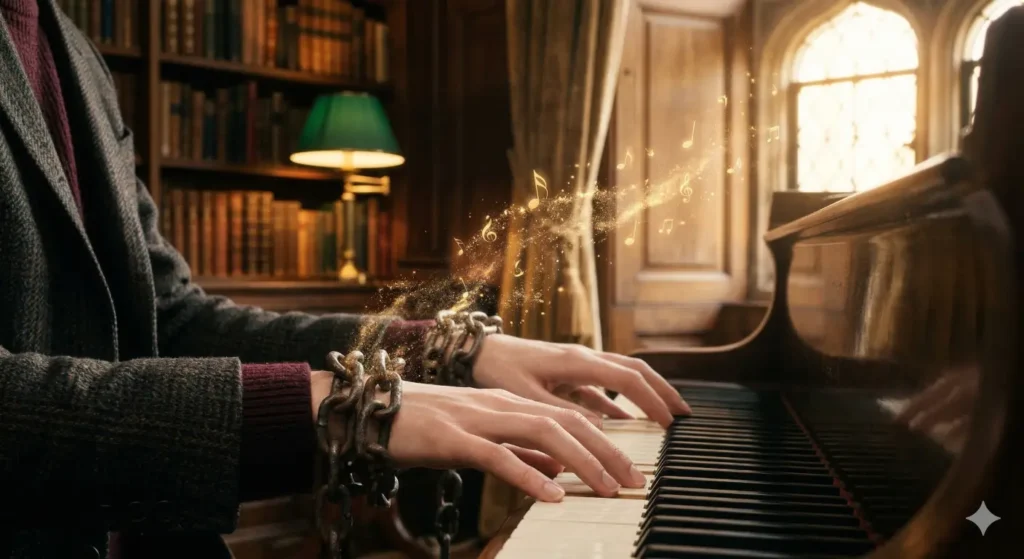
Think of a beautifully tragic play or a sweeping classical symphony. The notes are already written on the page. The musicians cannot deviate from the sheet music; their path is entirely determined. Yet, the beauty lies in how they play it. They can perform their predetermined parts with breathtaking passion, heartbreaking sorrow, and profound grace.
We can adopt this same aesthetic distance toward our own lives. By accepting our invisible strings, we free ourselves from the crushing anxiety of ultimate responsibility. We can learn to observe our own lives—our passions, our failures, and our inevitable trajectory—with the melancholic appreciation of art. We stop fighting the script and start marveling at the tragic beauty of the performance.
The Grand Architecture of Our Illusion: This melancholic acceptance is the final piece of a much larger puzzle. To fully understand the unseen forces shaping your desires and history, dive into our master guide: .
Explore our
FaceBook: @wevereleftoff.offical
İnstagram: @wevereleftoff.offical
Youtube: @wevereleftoff.offical