The Illusion of Free Will: Schopenhauer, Hegel, and Our Invisible Strings
Why the illusion of free will haunts human consciousness
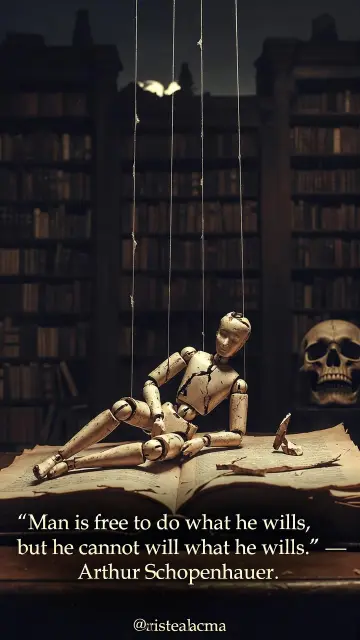
We walk through life with the profound conviction that we are the authors of our own destiny. Every morning, we wake up and believe we choose our paths, our passions, and our companions. But what if this autonomy is nothing more than a beautifully crafted, comforting fabrication? The illusion of free will is perhaps the most terrifying yet intoxicating concept in the history of philosophy. It suggests that beneath the surface of our conscious decisions lies an intricate, unseen machinery—biological imperatives, historical necessities, and blind cosmic forces—quietly pulling our strings.
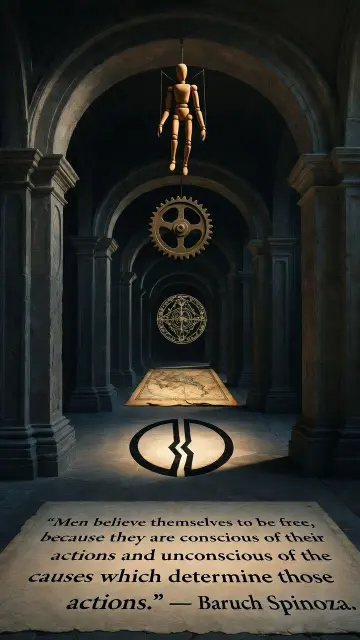
To gaze into this philosophical abyss is to face a chilling realization: we might merely be marionettes dancing on a stage we did not build, performing a script we did not write. Before we unravel the dark theories of the great pessimists and idealists, watch our visual essay and deep dive into this paradox above.
Arthur Schopenhauer and the blind force of the “Will”
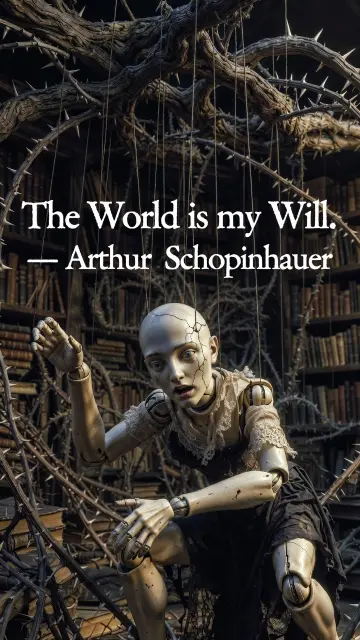
If our choices are not entirely our own, then whose are they? Enter Arthur Schopenhauer, the uncompromising maestro of philosophical pessimism. For Schopenhauer, the universe is not driven by reason, logic, or a benevolent creator. Instead, it is propelled by a relentless, irrational, and blind force he simply called the “Will” (Wille).
Explore the Depths:To understand how this biological trap dictates our romantic and personal ambitions, dive deeper into our complete analysis of the Schopenhauer concept of will.
Are our deepest desires truly our own?
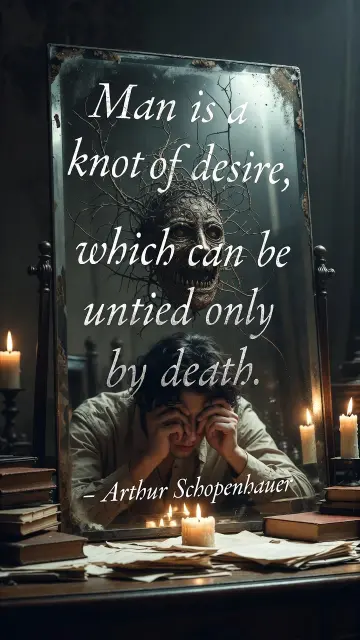
Before we look outward at the grand tapestry of human history, we must linger on the terrifying intimacy of this illusion. If our romantic pursuits, our fierce ambitions, and our most private agonies are merely the Will asserting itself, then the very core of our identity is brought into question. We suffer, we strive, and we conquer, believing these actions define our unique souls. Yet, this is the ultimate tragedy of the human condition: we are passionately dedicated to goals that were never truly ours to begin with. We are vessels, momentarily filled with the relentless energy of a universe that does not care for our individual happiness, only its own blind continuation.
G.W.F. Hegel and the grand stage of historical necessity
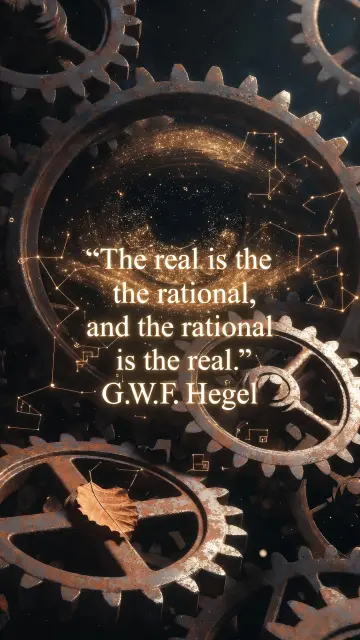
If Schopenhauer revealed the biological and cosmic strings manipulating our inner lives, G.W.F. Hegel exposes the grand, inescapable script of human civilization. To read Hegel is to realize that the timeline of our existence is not a series of random events or the result of collective human choices. Instead, history is a meticulously unfolding process, a stage where an unseen, macrocosmic force is driving toward a singular, predetermined realization.
You might believe that great leaders, revolutionaries, and thinkers bend the arc of history through their sheer willpower and intellect. Hegel shatters this comforting romanticism. Enter the concept of historical necessity, where humanity is not the playwright, but merely the cast.
The “Cunning of Reason” and the Absolute Spirit
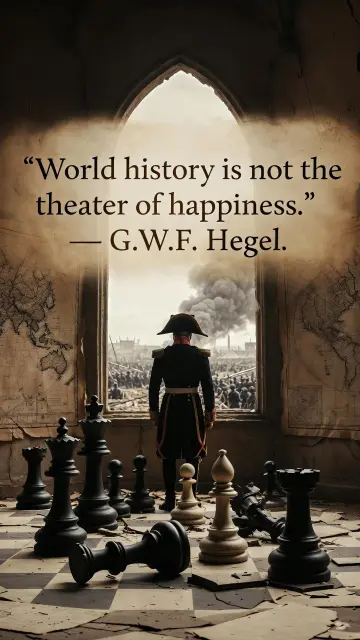
Hegel introduces a concept as magnificent as it is unnerving: the List der Vernunft, or the “Cunning of Reason.” He argued that world-historical individuals—figures like Julius Caesar or Napoleon Bonaparte—believed they were conquering the world for their own glory, power, and personal ambition. But they were deeply mistaken.
They were simply instruments, unknowingly utilized by what Hegel called the Geist (the Spirit). The Spirit uses the passions, egos, and immense suffering of individuals to advance its own ultimate goal: the realization of human consciousness and freedom. Once these great figures serve their purpose, the Spirit discards them, leaving them to fall into ruin or despair. If the titans of history were merely tools wielded by an invisible hand, what does that make the rest of us? We are caught in the inexorable march of an intellect far greater than our own.
Unveil the Machinery of History:Are we all just disposable pawns in a cosmic game of chess? Discover how the shapes human destiny, uses our passions against us, and renders our individual choices obsolete.
Determinism vs. Agency: The ultimate philosophical paradox
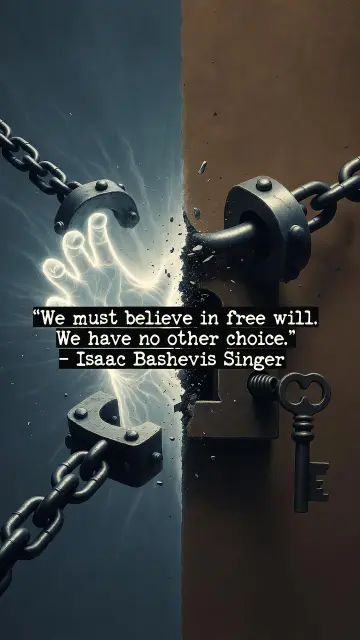
When we place Schopenhauer’s blind Will alongside Hegel’s march of History, a suffocating picture emerges. We are confronted with the crushing weight of determinism—the terrifying proposition that every thought, action, and tragedy might have been set in motion long before we were born. Yet, the paradox remains: we feel intensely free.
The agonizing weight of making a difficult choice, the bitter sting of regret, and the sudden thrill of rebellion all feel profoundly real to our conscious minds. How do we reconcile this subjective, undeniable experience of freedom with the objective, terrifying reality of our invisible strings? This clash between deterministic forces and our deeply ingrained sense of agency is a wound in human consciousness that refuses to heal. We are forced to live as though we are free, even while suspecting we are not.
Finding grace and meaning within our invisible chains
Does the absence of absolute freedom render our lives entirely meaningless? To end the inquiry here would be to surrender to nihilism. The true, melancholic beauty of this philosophy lies not in despair, but in radical acceptance. Once we stop frantically fighting the ghost of autonomy, a profound and tragic grace can be found.
Accepting our chains does not mean sinking into apathy; rather, it is an invitation to observe our own lives with the aesthetic distance of a tragic hero in a grand play. We can find deep meaning not by hopelessly trying to alter the script, but by playing our predetermined roles with devastating passion and profound awareness. The strings may be pulling us, but we can still choose to marvel at the tragic beauty of the dance.
Embrace the Melancholy:Can we find a beautiful resolution when our paths are already written? Delve into the ultimate philosophical battle of and discover the art of accepting our chains.
Further explorations into philosophical determinism
The journey into the illusion of choice does not end here. This exploration of Schopenhauer’s biological trap and Hegel’s historical stage is merely the threshold into a much vaster, darker labyrinth of thought. The human condition is a paradox meant to be explored, not solved. As you continue to wander through these philosophical corridors, keep questioning the origin of your deepest desires, the unseen forces shaping your history, and the beautiful tragedy of your existence. The strings are there, but the awareness of them is the closest we might ever come to true freedom.
Table of Contents
We proudly point to our deepest desires—the sudden urge to fall in love, the burning ambition to achieve greatness, or the simple, desperate instinct to survive another day—as definitive proof of our individuality. Yet, Schopenhauer argues with devastating clarity that these are merely the imperatives of the Will manifesting through us. You do not choose whom you love; the survival and continuation of the species choose through you. We are tricked by our own intellect into believing we are in the driver’s seat, while in reality, we are serving a master we cannot even see. We are prisoners of our own cravings.