

When you feel the sudden, intoxicating rush of romantic love, or the burning drive to achieve your highest ambitions, you naturally assume these feelings belong to you. You believe you are the author of your passions, carefully writing the story of your life. However, if we view reality through the terrifying and profound lens of the Schopenhauer concept of will, this comforting notion shatters entirely.
Arthur Schopenhauer, the 19th-century master of philosophical pessimism, proposed a worldview that strips humanity of its rational pride. According to him, we are not the masters of our own house. Instead, we are merely the instruments of a blind, restless, and irrational force.
Table of Contents
The Blind, Irrational Force Dictating Your Life
To grasp the Schopenhauer concept of will, we must first discard the idea of a universe governed by logic, divine reason, or scientific predictability. For Schopenhauer, the fundamental essence of all existence—the underlying reality beneath everything we see and touch—is what he called the “Will” (Wille).
Unlike human will, which we associate with conscious decision-making, Schopenhauer’s Will is not a thinking entity. It has no ultimate goal, no moral compass, and no grand design. It is simply a blind, endless striving. It is the raw, unquenchable thirst for life and reproduction that surges through every plant, animal, and human being. It is the force that makes the ivy fiercely climb a brick wall, the predator hunt its prey, and humanity endlessly chase after desires that only bring fleeting satisfaction.
Love, Ambition, and the Biological Trap
Where this philosophy becomes truly chilling is how it applies to our daily human experience. Schopenhauer argued that our intellect—our ability to reason, think, and plan—is not our true master. The intellect is merely a clumsy servant, a tool evolved to help the Will achieve its blind objectives.
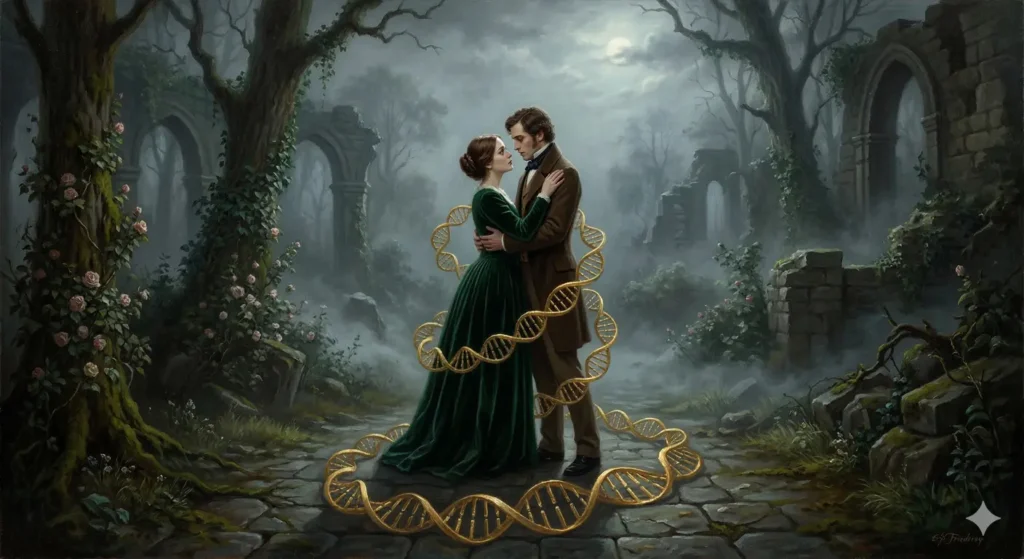
Consider romantic love. We write poetry about soulmates and destiny, believing our choice of a partner is a deeply personal and intellectual alignment. Schopenhauer brutally dismantles this. He suggests that romantic love is nothing more than the Will to Life tricking us into fulfilling its only purpose: the continuation of the species. The intense passion we feel is the Will projecting an illusion of eternal happiness to ensure we reproduce. Once the Will’s objective is met, the illusion often fades, leaving us bewildered by our own past desires.
Similarly, our grandest ambitions, our craving for status, and our relentless pursuit of success are not uniquely “ours.” They are simply the Will asserting its dominance through our individual egos. We are biological puppets, driven by a cosmic hunger that can never truly be fed.
Why the Schopenhauer Concept of Will Denies Human Agency
Because the Will is the master and the intellect is merely its subordinate, our sense of free will is a beautifully constructed lie. We may choose how to pursue our desires, but we do not choose the desires themselves. As Schopenhauer famously stated, “Man can do what he wills, but he cannot will what he wills.”
Our conscious mind simply rationalizes the urges that the Will has already set into motion. We construct elaborate, logical narratives to explain why we fell in love, why we took a certain job, or why we hold certain beliefs, completely blind to the fact that the underlying drive was entirely out of our control.
Finding Solace: Art, Music, and the Escape from the Will
Does the Schopenhauer concept of will leave us entirely without hope? If we are trapped in a cycle of endless craving and inevitable suffering, is there any escape? For Schopenhauer, the only temporary relief from the tyranny of the Will lies in aesthetic contemplation.
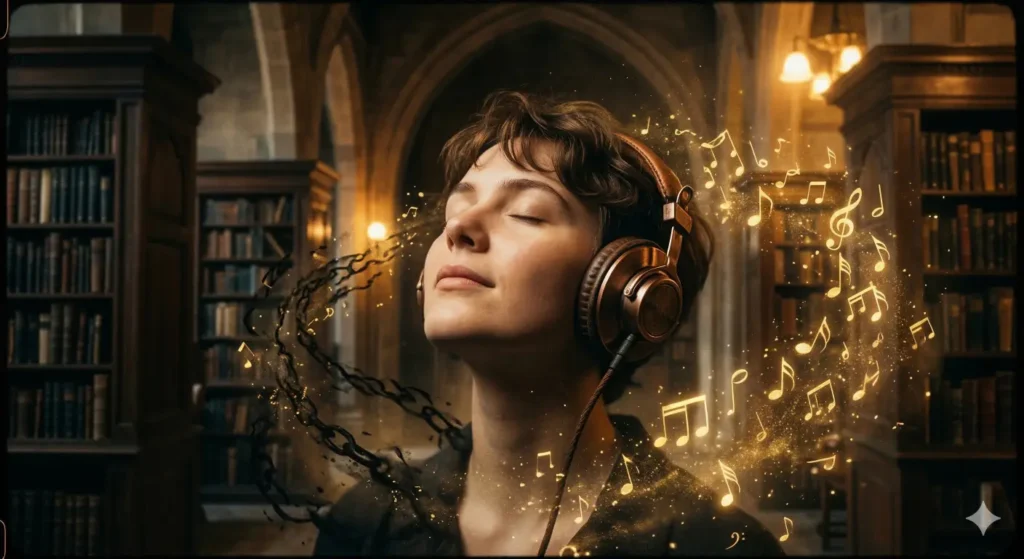
When we lose ourselves in true art, particularly in the profound, wordless depths of music, we momentarily quiet the demanding voice of the Will. Music, Schopenhauer believed, is not just a copy of the world, but a direct copy of the Will itself. By immersing ourselves in it, we become pure, will-less subjects of knowing. We find a fleeting, melancholic grace—a quiet rebellion against the biological chains that bind us.
The Bigger Picture: The revelation that our desires are not our own is only the first step into the labyrinth. To understand how this biological trap connects to the grander, inescapable forces of history and the ultimate philosophical paradox of our existence, read our complete guide on .
Explore our
FaceBook: @wevereleftoff.offical
İnstagram: @wevereleftoff.offical
Youtube: @wevereleftoff.offical